
PSHE
RSHE (Relationships, Sex and Health Education) sits within the Personal, Social and Health Education (PSHE) Curriculum. High-quality, evidence-based and age appropriate teaching of RSHE supports children with emotional, social and cultural development, and involves learning about the important an important aspect of life: forming safe, positive and supportive relationships.
Statutory guidance from the Department for Education outlines what schools must teach within Key Stage Two. This includes teaching about the following themes:
| Relationships Education | Physical Health and Mental Wellbeing | Sex Education |
|
|
Sex education is not compulsory in primary schools, but we recommend that primaries teach sex education in years 5 and/or 6, in line with content about conception and birth, which forms part of the national curriculum for science. (DfE 2025) Please scroll down to read more about how sex education is taught at Burlington Junior School. |
At Burlington Junior School, we make use of the Jigsaw programme to support our teaching of PSHE and RSHE. To find out more about this, please click on the icon below:
To find out more, please read our RSHE web-page and our RSHE Policy, which you can find here.
To read more about the statutory guidelines for schools from the Department for Education, please click here.
To read more about our health and sex education learning journey (including puberty), please click here.
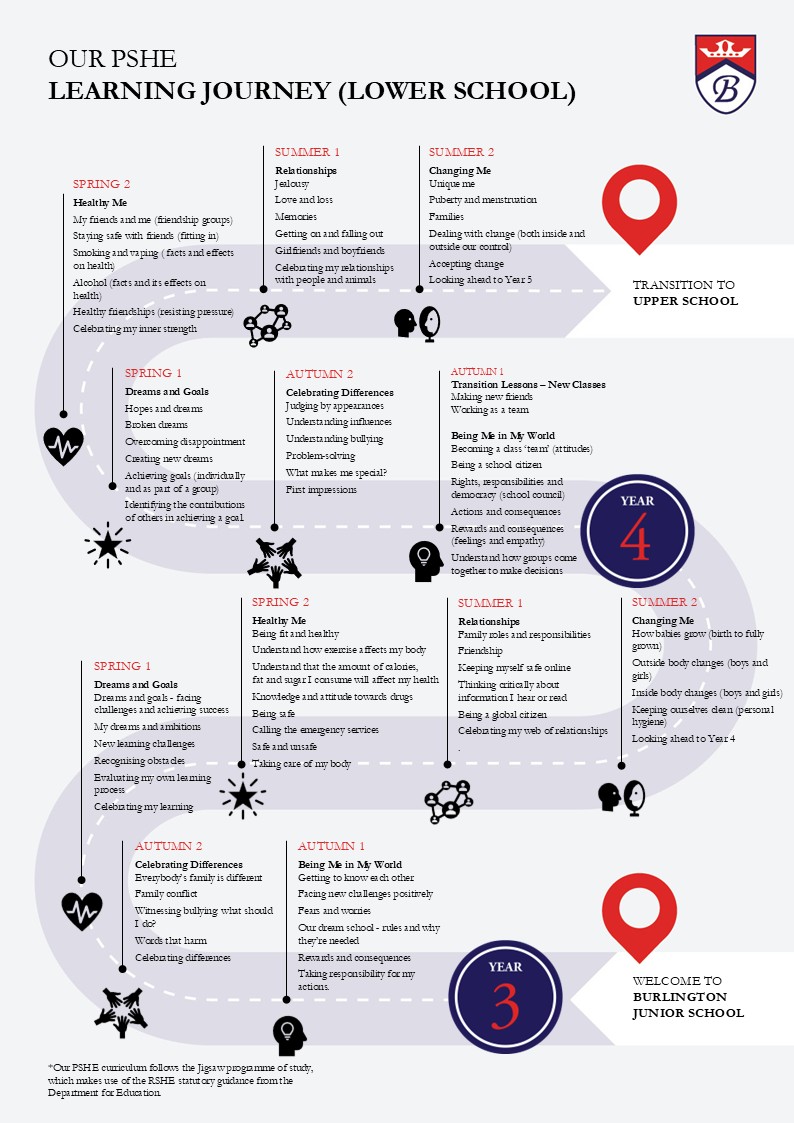
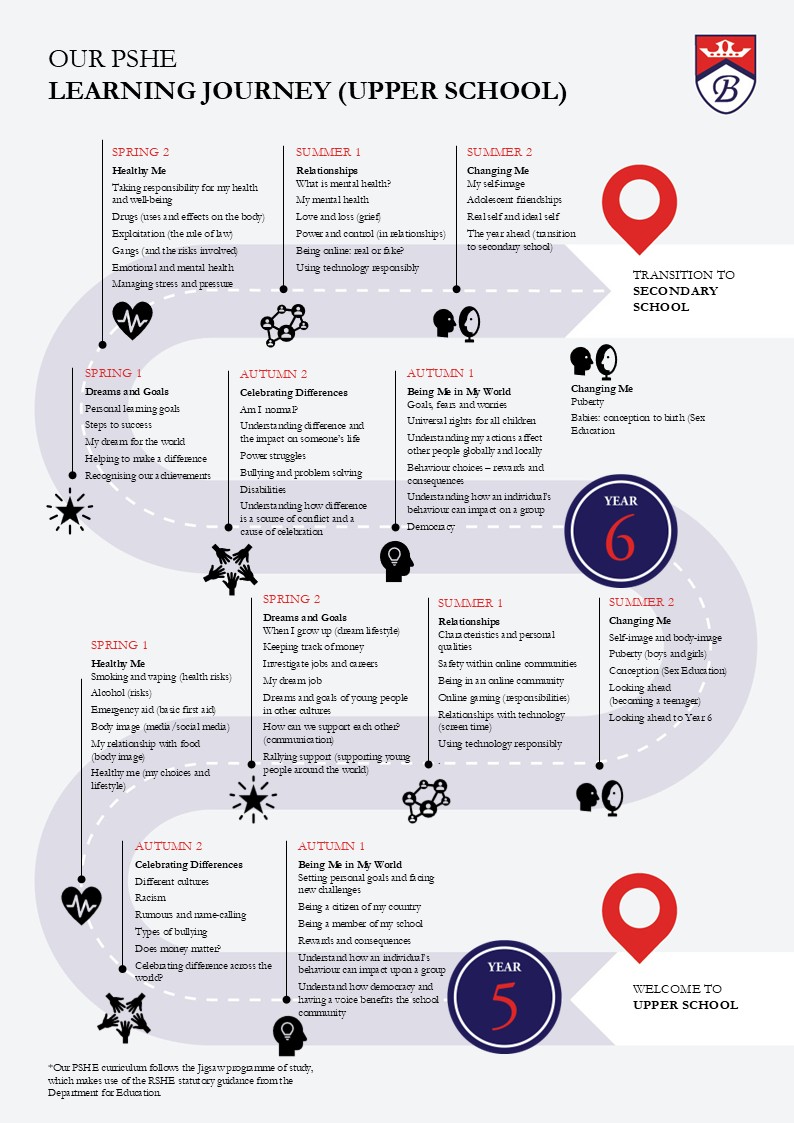
Our PSHE Learning Journey
Through the Jigsaw programme, pupils encounter a range of themes, including ‘changing me’, ‘being me in my world’ and ‘celebrating difference’. British values are discussed and explored throughout the PSHE and wider curriculum. The Jigsaw themes of ‘healthy me’ and ‘changing me’ teach children about personal hygiene and safety, as well as the changes that occur to their bodies.
Relationships, Sex and Health Education (RSHE) sits within our PSHE curriculum. RSHE teaches pupils about positive relationships, including friendships, family relationships and relationships with other children and adults. Children are taught about having respect for others and understanding that families are made up in many ways. Children also explore their own emotional and mental wellbeing, whilst also learning about different ways of staying safe, including online. For more information about RSHE at Burlington Junior School, please click on following link: Relationships Education (RSHE).
"I think PSHE is important as we learn about how everyone is different."
Year 5 Pupil
"PSHE lessons teach you how to see things from other people's points of view."
Year 4 Pupil
Enrichment in PSHE
Learning that takes place within PSHE supports pupils beyond their classroom lesson. Pupils learn about keeping safe, having healthy relationships, friendships and wellbeing and this learning is used in all aspects of school life.
Assemblies support this learning further by addressing school and world issues, allowing pupils to participate in discussions around these topics.
Where appropriate, enrichment opportunities are planned to enhance learning. This may include visitors coming into school to discuss topics. Recently, local police officers have visited Year 6 to teach them more about keeping safe.
We participate in whole-school events and theme weeks throughout the year such as anti-bullying week (including Odd Socks Day), Diversity Week and Children's Mental Health Day.
"I like learning how to solve friendship problems so that I am happy at school."
Year 4 Pupil
Useful Learning Links
BBC Bitesize - PSHE and Citizenship